Building positive experiences for clients will build customer satisfaction and bring them back time and time again. Building positive experiences is good business.
Building connections begins with developing insights; it doesn’t matter if the product is an app or a cardboard box; developing an understanding of the user and their needs is fundamental to creating a design solution that enhances a user’s experience.
Building a user’s experience more recently means creating intuitive online design solutions. I believe designing physical products like packaging also entails building an experience for the client. So whether it’s designing packaging that instructs customers how to install their new product or packaging that reinforces the essence of a brand, each solution is well-considered and appropriate for each design brief. How a customer interacts with a physical product is as intuitive and relies upon good design as any app or online product. The customer or client is alone with the product, and if they can’t use it, it’s no good to them.
Building a user’s experience more recently means creating intuitive online design solutions. I believe designing physical products like packaging also entails building an experience for the client. So whether it’s designing packaging that instructs customers how to install their new product or packaging that reinforces the essence of a brand, each solution is well-considered and appropriate for each design brief. How a customer interacts with a physical product is as intuitive and relies upon good design as any app or online product. The customer or client is alone with the product, and if they can’t use it, it’s no good to them.
Building a user’s experience more recently means creating intuitive online design solutions. I believe designing physical products like packaging also entails building an experience for the client. So whether it’s designing packaging that instructs customers how to install their new product or packaging that reinforces the essence of a brand, each solution is well-considered and appropriate for each design brief. How a customer interacts with a physical product is as intuitive and relies upon good design as any app or online product. The customer or client is alone with the product, and if they can’t use it, it’s no good to them.
BigPond
Customers of BigPond who purchased their internet products in-store received a fully packaged item. Customers who purchased their internet products online received an overnight courier bag with a miscellany of papers and a generic box with the modem and cables packed inside. The brief was to create a customer experience that matches the in-store purchase and reduce the number of calls to the customer helpline because customers have set the modems up incorrectly.
BigPond
Customers of BigPond who purchased their internet products in-store received a fully packaged item. Customers who purchased their internet products online received an overnight courier bag with a miscellany of papers and a generic box with the modem and cables packed inside. The brief was to create a customer experience that matches the in-store purchase and reduce the number of calls to the customer helpline because customers have set the modems up incorrectly.
BigPond
Customers of BigPond who purchased their internet products in-store received a fully packaged item. Customers who purchased their internet products online received an overnight courier bag with a miscellany of papers and a generic box with the modem and cables packed inside. The brief was to create a customer experience that matches the in-store purchase and reduce the number of calls to the customer helpline because customers have set the modems up incorrectly.
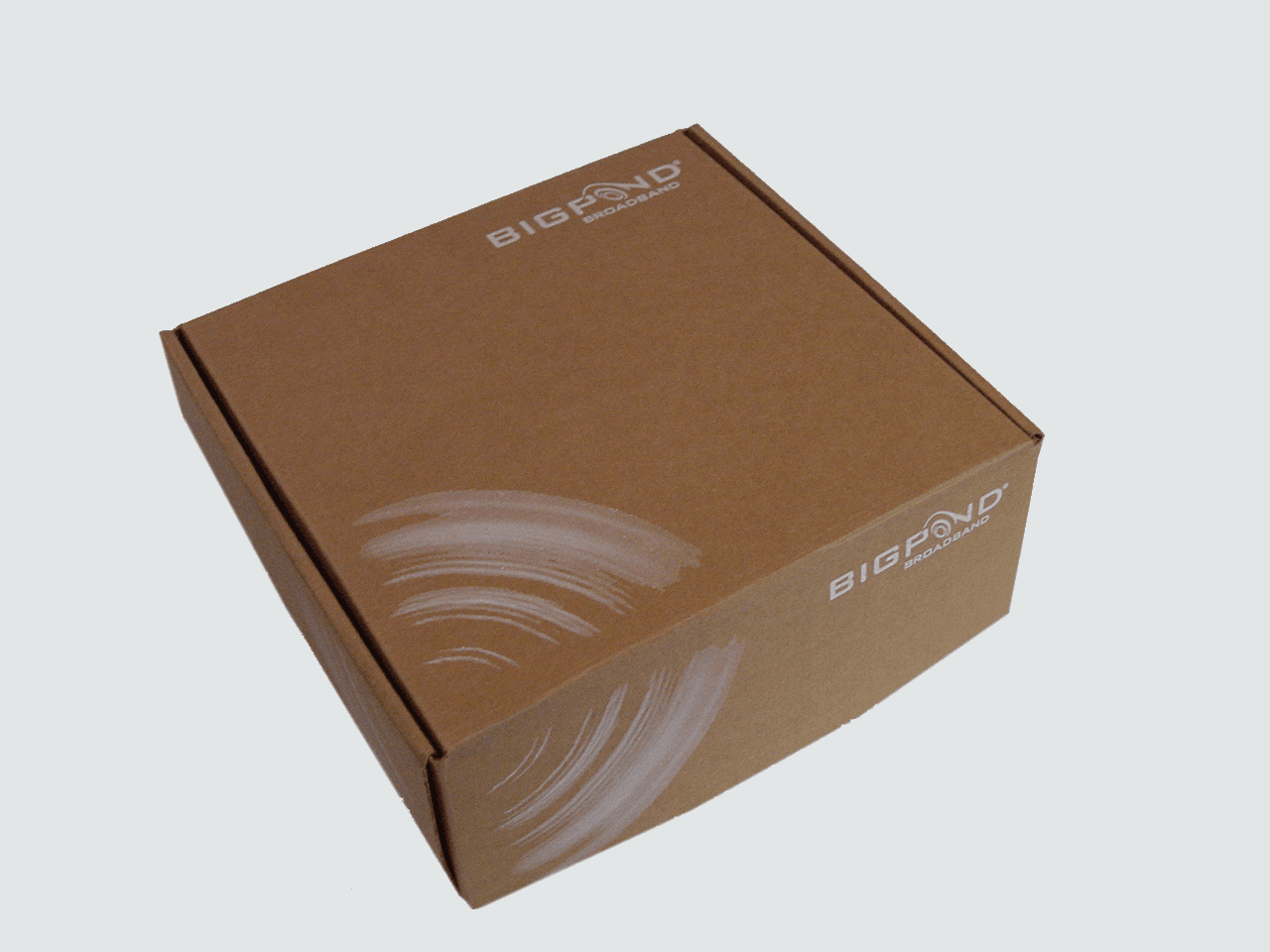
The packaging needed to guide the consumer through the installation process. It also needed to be adaptable for different products, which meant differing content, and be instructional so the customer would set up the modem correctly.
The packaging needed to guide the consumer through the installation process. It also needed to be adaptable for different products, which meant differing content, and be instructional so the customer would set up the modem correctly.
The packaging needed to guide the consumer through the installation process. It also needed to be adaptable for different products, which meant differing content, and be instructional so the customer would set up the modem correctly.
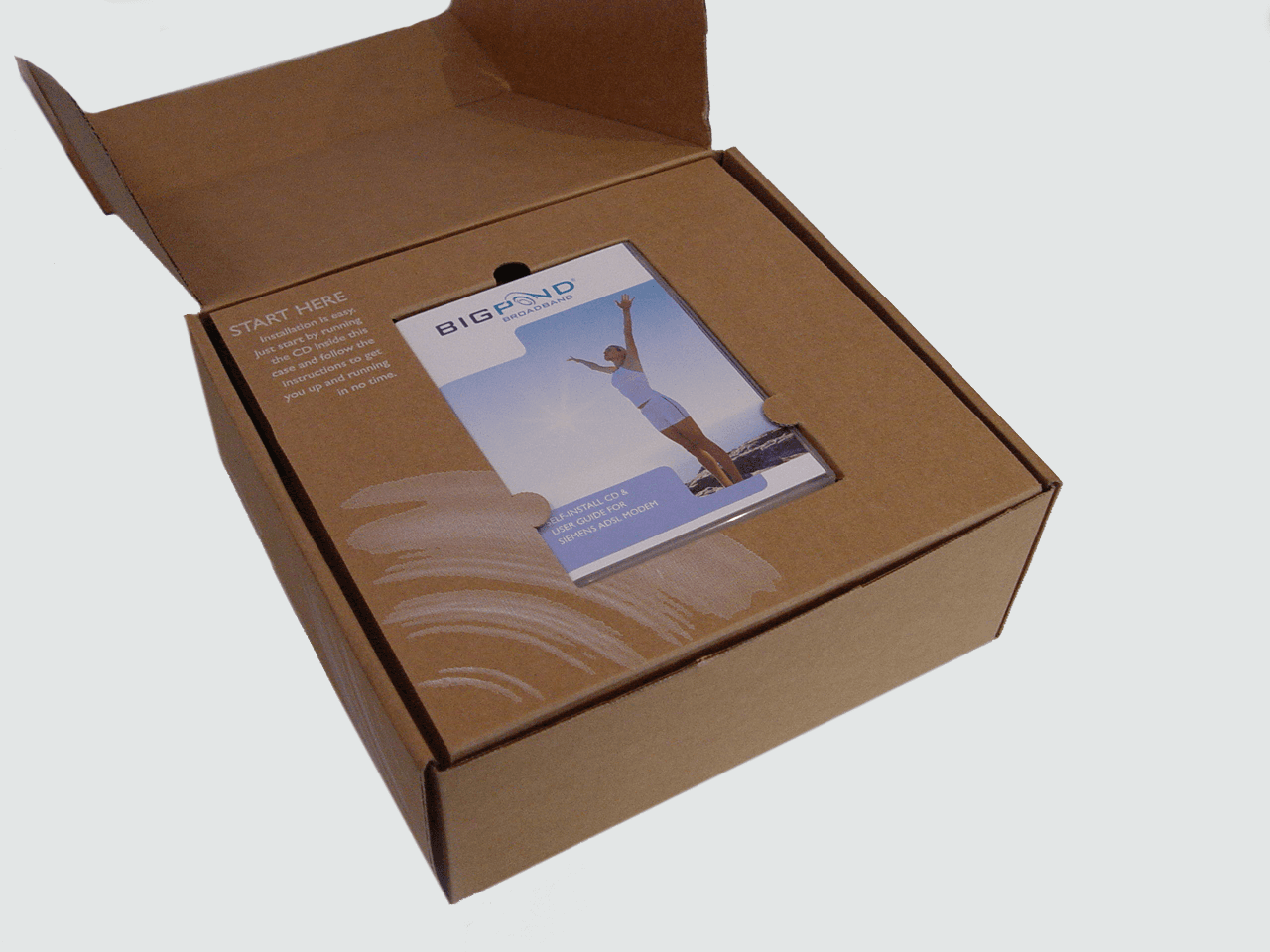

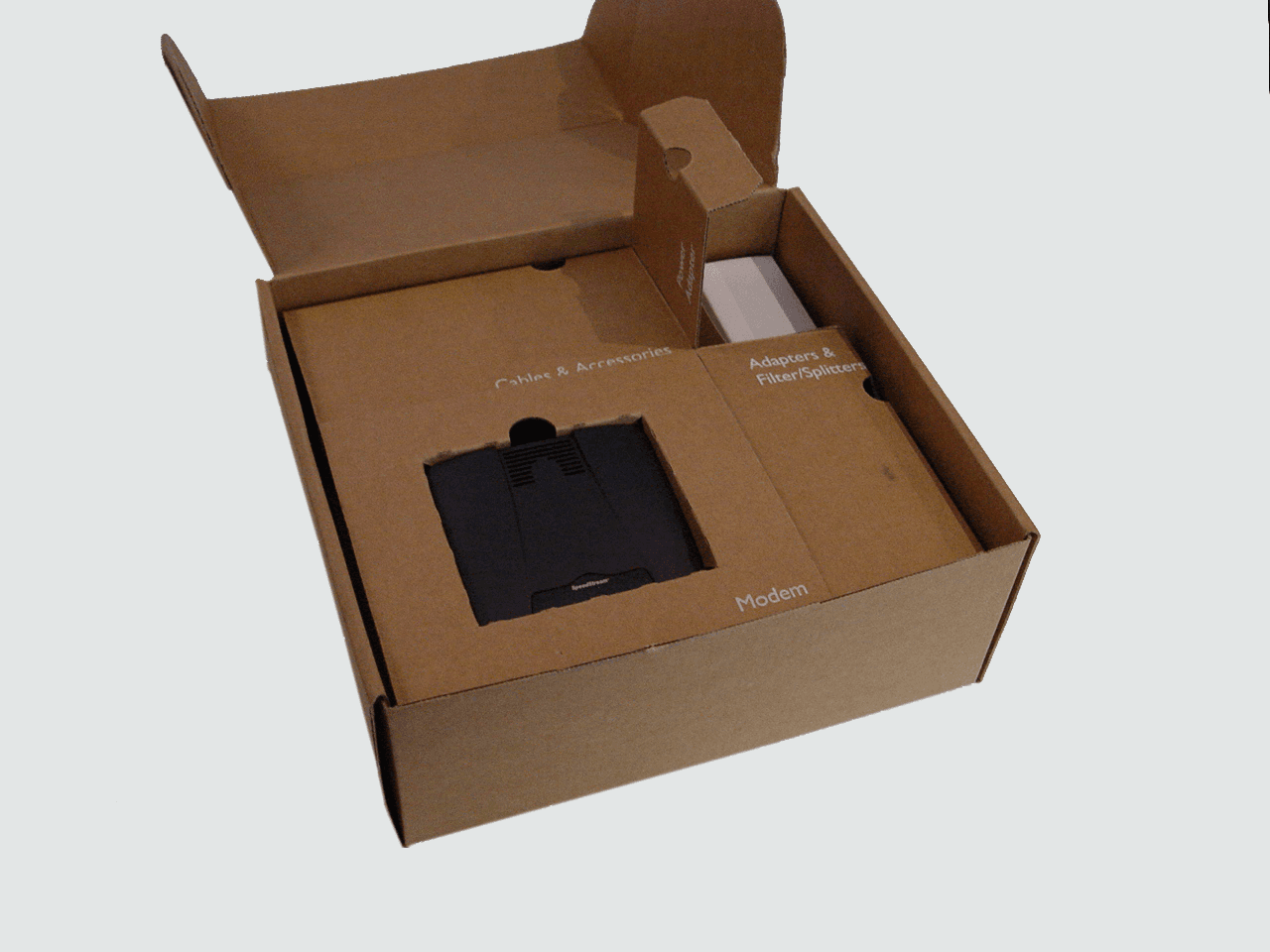
Corrugated card was chosen for cost and protection; it could also be the main packaging and remove the need for plastic envelopes. The pack was designed so the consumer progresses their way through the packaging in the order it needs to be installed. The install DVD and instruction are unavoidably first in the pack. A simple set of interlocking pockets then hold all the cables and other accessories below.
Corrugated card was chosen for cost and protection; it could also be the main packaging and remove the need for plastic envelopes. The pack was designed so the consumer progresses their way through the packaging in the order it needs to be installed. The install DVD and instruction are unavoidably first in the pack. A simple set of interlocking pockets then hold all the cables and other accessories below.
Corrugated card was chosen for cost and protection; it could also be the main packaging and remove the need for plastic envelopes. The pack was designed so the consumer progresses their way through the packaging in the order it needs to be installed. The install DVD and instruction are unavoidably first in the pack. A simple set of interlocking pockets then hold all the cables and other accessories below.
Australian Defence Force
Multi-media students in the Australian Defence Force study in a blended environment, fully mixing online, live tutorials and face-to-face study. Students study a range of courses, including 4-week short courses, 12-week certificates and self-paced online courses over a year. Research with students revealed issues arising from the courses’ fast-paced nature and online delivery.
Australian Defence Force
Multi-media students in the Australian Defence Force study in a blended environment, fully mixing online, live tutorials and face-to-face study. Students study a range of courses, including 4-week short courses, 12-week certificates and self-paced online courses over a year. Research with students revealed issues arising from the courses’ fast-paced nature and online delivery.
Australian Defence Force
Multi-media students in the Australian Defence Force study in a blended environment, fully mixing online, live tutorials and face-to-face study. Students study a range of courses, including 4-week short courses, 12-week certificates and self-paced online courses over a year. Research with students revealed issues arising from the courses’ fast-paced nature and online delivery.
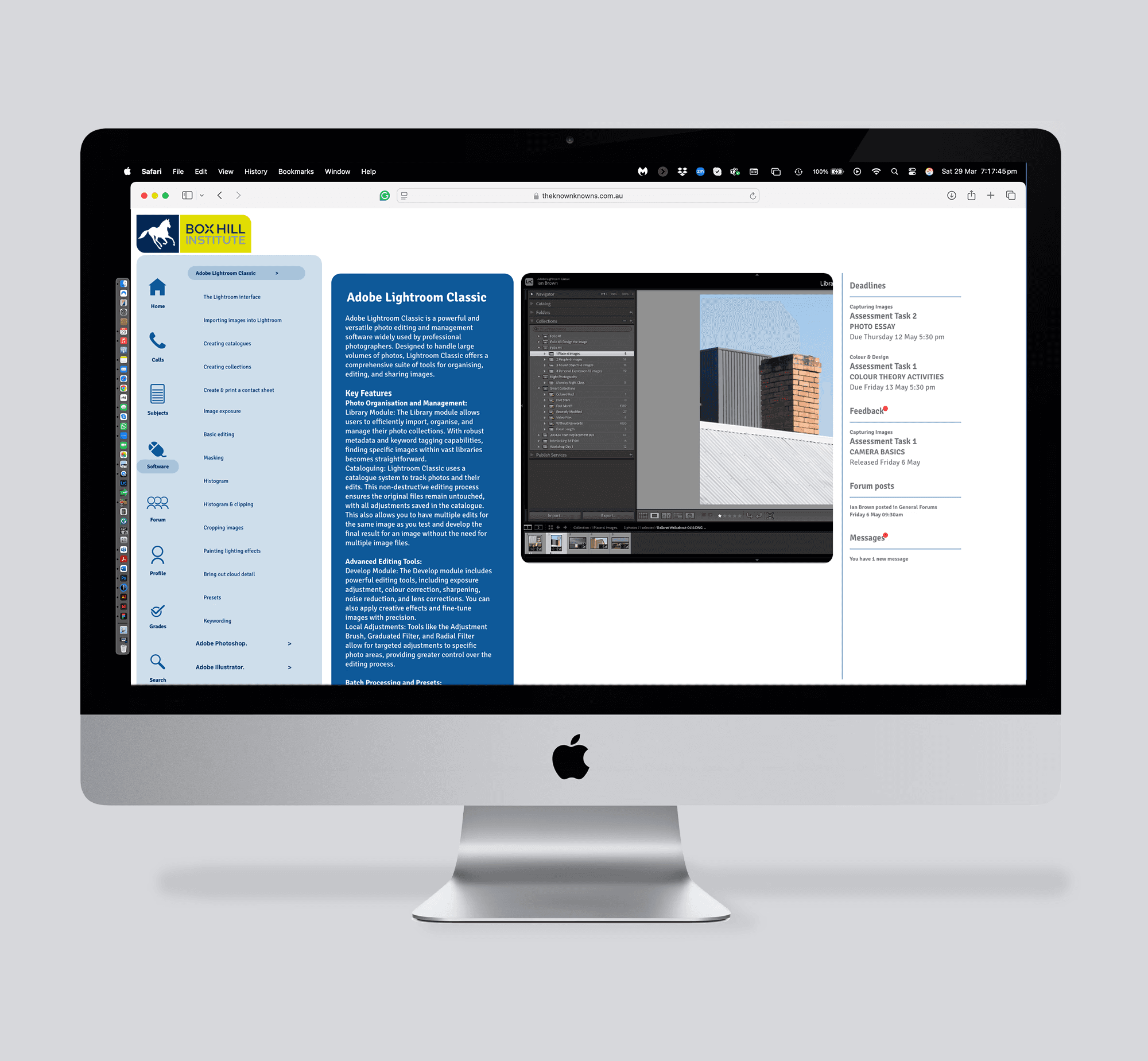
What was needed was a more visually engaging site. Research with students raised the issue students encountered when trying to find old content. Software, in particular, was an issue; if a tutorial was delivered in a subject, students couldn’t recall which subject it was in. Solving this issue was fundamental to the new solution.
What was needed was a more visually engaging site. Research with students raised the issue students encountered when trying to find old content. Software, in particular, was an issue; if a tutorial was delivered in a subject, students couldn’t recall which subject it was in. Solving this issue was fundamental to the new solution.
What was needed was a more visually engaging site. Research with students raised the issue students encountered when trying to find old content. Software, in particular, was an issue; if a tutorial was delivered in a subject, students couldn’t recall which subject it was in. Solving this issue was fundamental to the new solution.
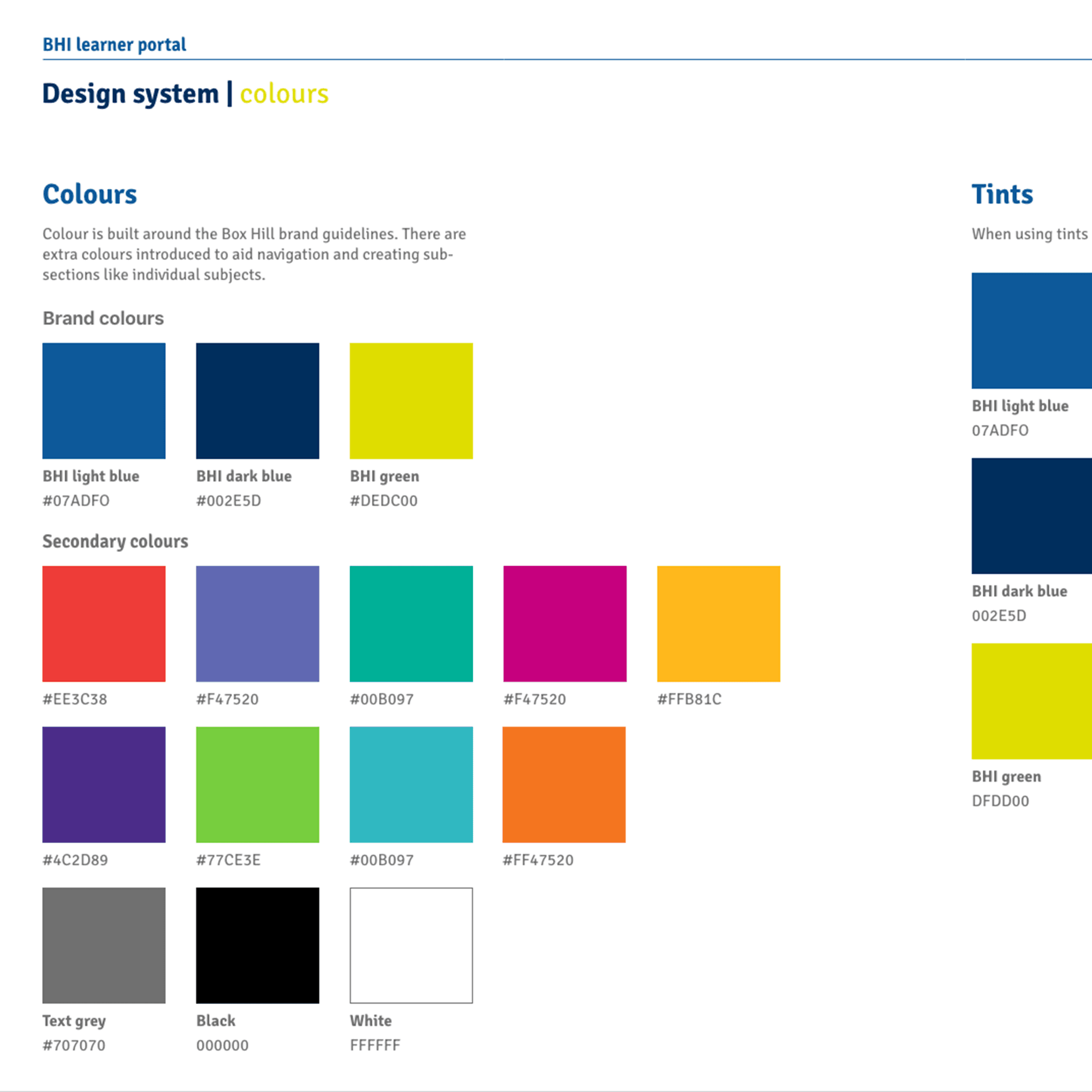
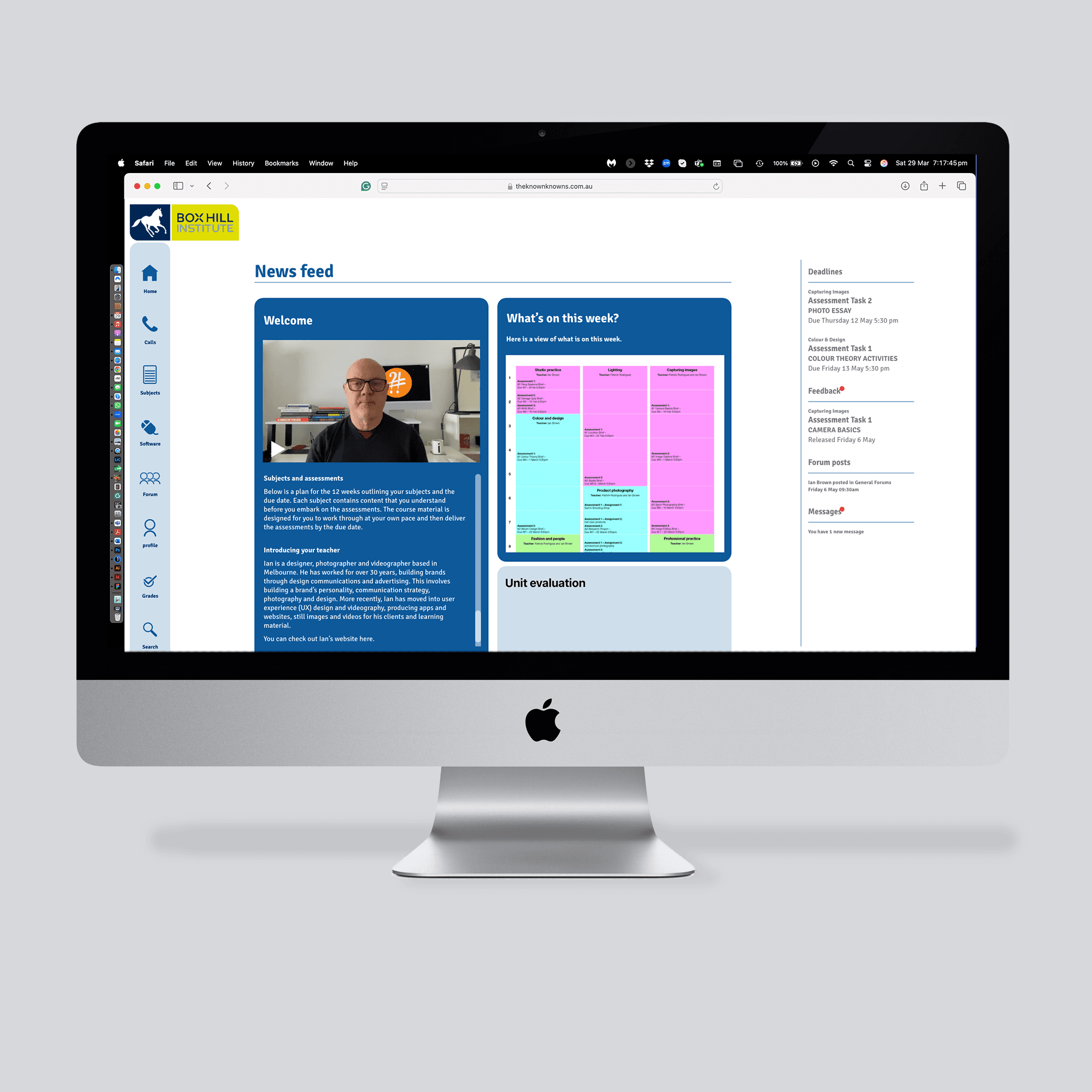
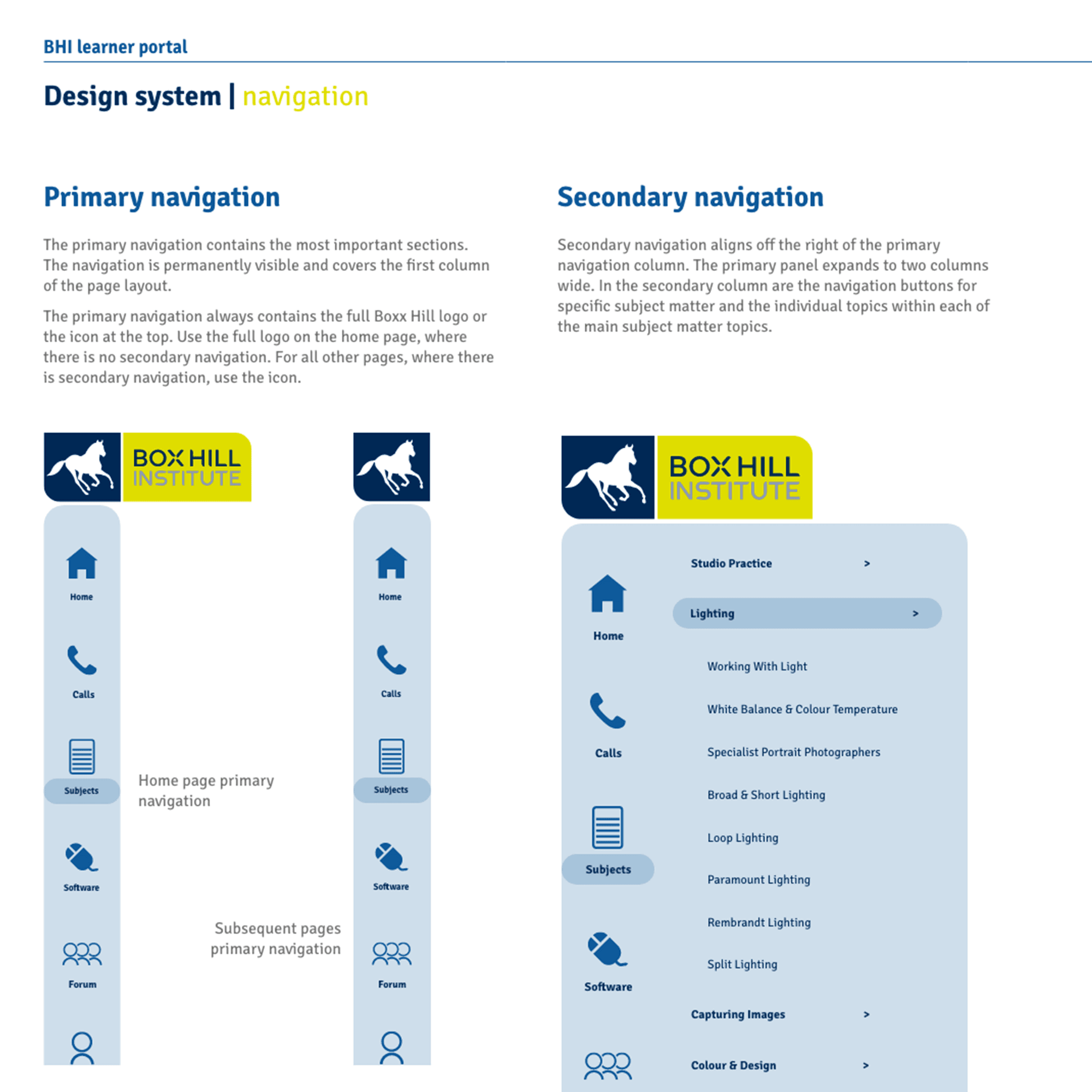
The navigation and information architecture were critical to the design. Balancing the amount of content for each topic and managing the number of topics and clicks students needed to work through to find and refind content. The issues with locating previous content were solved by removing all software tutorials from within the individual subjects and creating a stand-alone software section within each course.
The navigation and information architecture were critical to the design. Balancing the amount of content for each topic and managing the number of topics and clicks students needed to work through to find and refind content. The issues with locating previous content were solved by removing all software tutorials from within the individual subjects and creating a stand-alone software section within each course.
The navigation and information architecture were critical to the design. Balancing the amount of content for each topic and managing the number of topics and clicks students needed to work through to find and refind content. The issues with locating previous content were solved by removing all software tutorials from within the individual subjects and creating a stand-alone software section within each course.
Buzz Connect
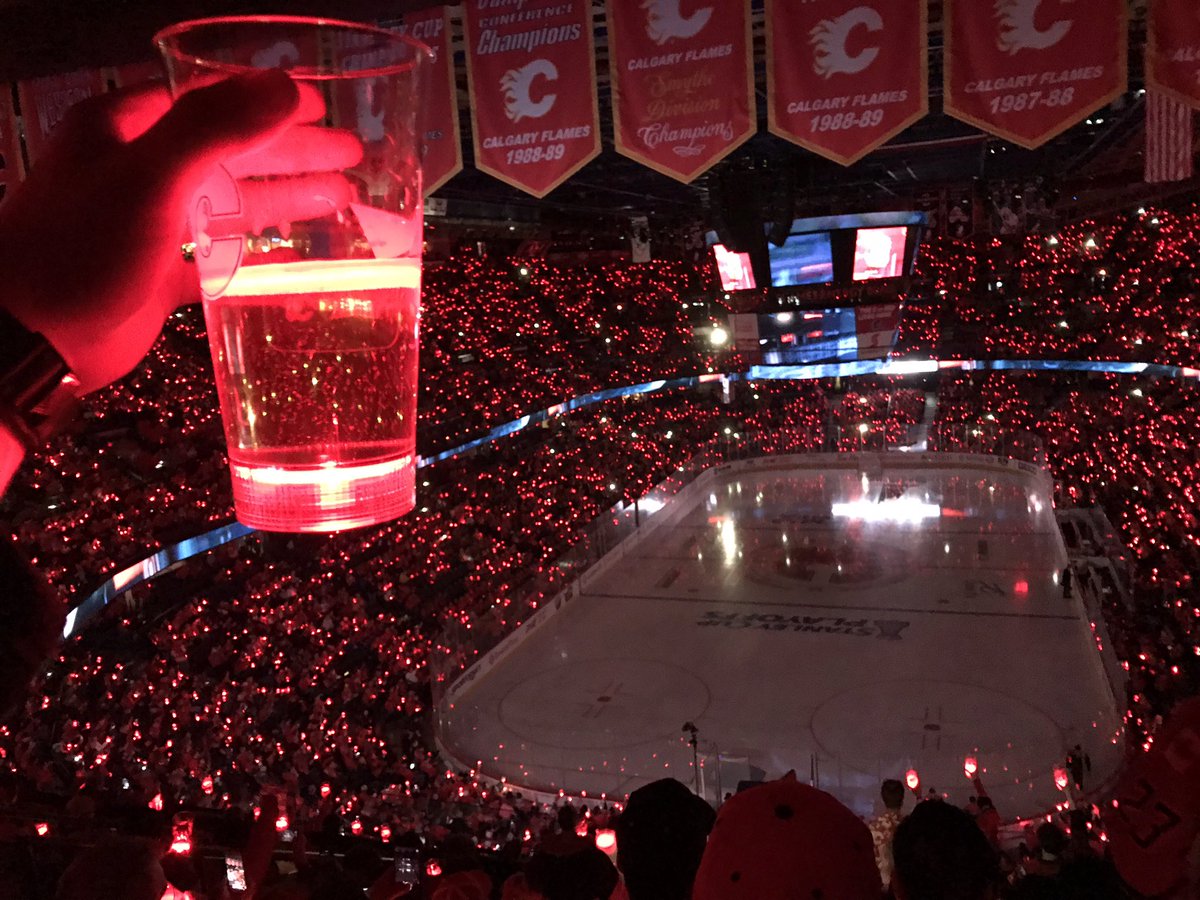
Melbourne-based agency Buzz Connect was developing a customer experience for Budweiser and Bud Light to build customer engagement with the USA’s major sports. The “Red Light” campaign built customer engagement with interactive beer glasses and sirens that lit up when teams scored in NFL and Ice Hockey matches. Red Light glasses were used in stadia and were available to buy for home use, and Ice Hockey sirens were also available. All the products were available with team logos and in team colours.
Buzz Connect
Melbourne-based agency Buzz Connect was developing a customer experience for Budweiser and Bud Light to build customer engagement with the USA’s major sports. The “Red Light” campaign built customer engagement with interactive beer glasses and sirens that lit up when teams scored in NFL and Ice Hockey matches. Red Light glasses were used in stadia and were available to buy for home use, and Ice Hockey sirens were also available. All the products were available with team logos and in team colours.
Buzz Connect
Melbourne-based agency Buzz Connect was developing a customer experience for Budweiser and Bud Light to build customer engagement with the USA’s major sports. The “Red Light” campaign built customer engagement with interactive beer glasses and sirens that lit up when teams scored in NFL and Ice Hockey matches. Red Light glasses were used in stadia and were available to buy for home use, and Ice Hockey sirens were also available. All the products were available with team logos and in team colours.
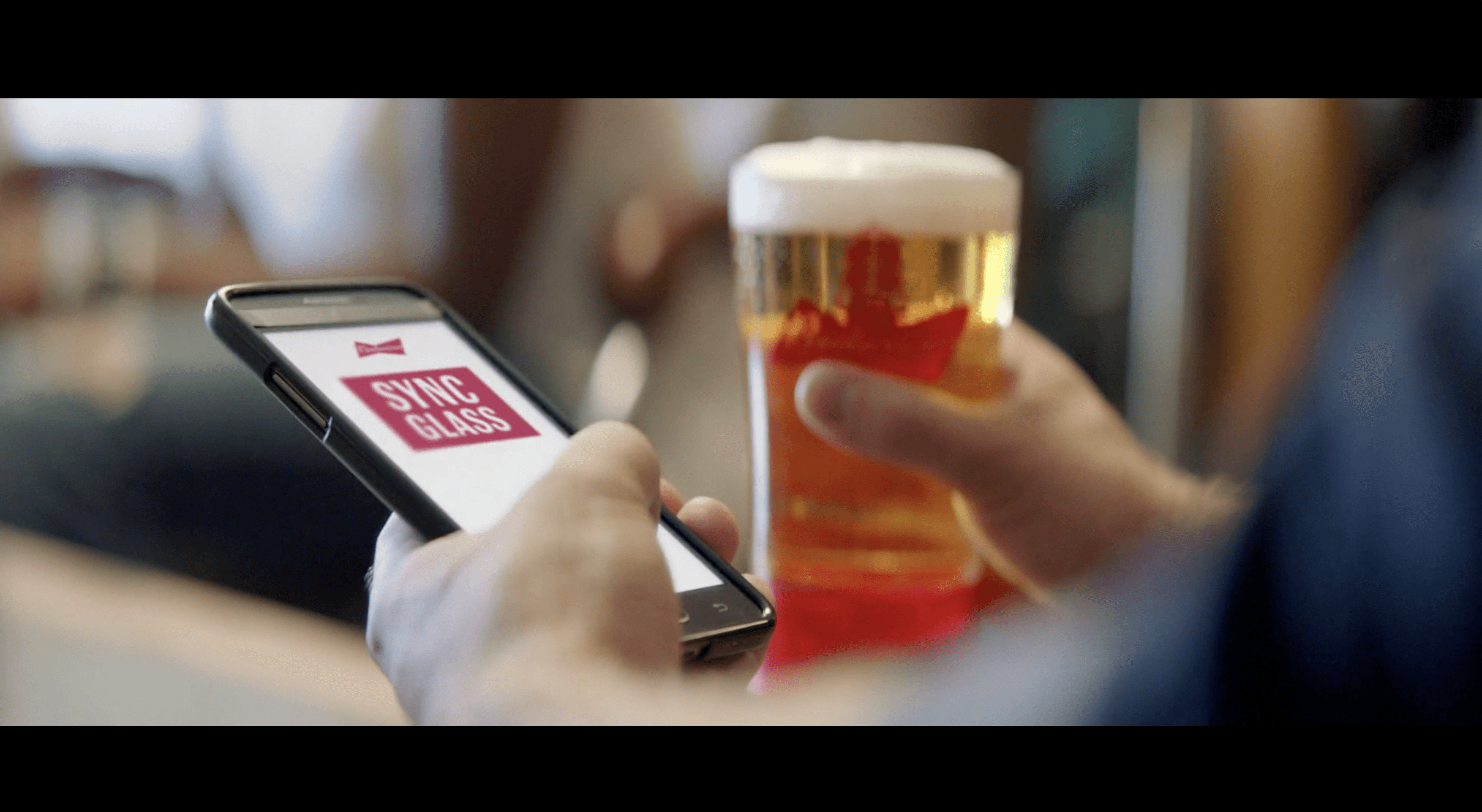
They needed help to develop the user interface. This included how to sign up, set up glasses and select the teams to support. The campaign extended from the app to merchandise including graphics for glasses, packaging and presentation material to consumers and pitch material for other sporting bodies. The project started with designing the user experience and user interface before moving on to the graphic application on products, product packaging, product mock-ups, procurement documentation, sales collateral and B2B presentation material.
They needed help to develop the user interface. This included how to sign up, set up glasses and select the teams to support. The campaign extended from the app to merchandise including graphics for glasses, packaging and presentation material to consumers and pitch material for other sporting bodies. The project started with designing the user experience and user interface before moving on to the graphic application on products, product packaging, product mock-ups, procurement documentation, sales collateral and B2B presentation material.
They needed help to develop the user interface. This included how to sign up, set up glasses and select the teams to support. The campaign extended from the app to merchandise including graphics for glasses, packaging and presentation material to consumers and pitch material for other sporting bodies. The project started with designing the user experience and user interface before moving on to the graphic application on products, product packaging, product mock-ups, procurement documentation, sales collateral and B2B presentation material.
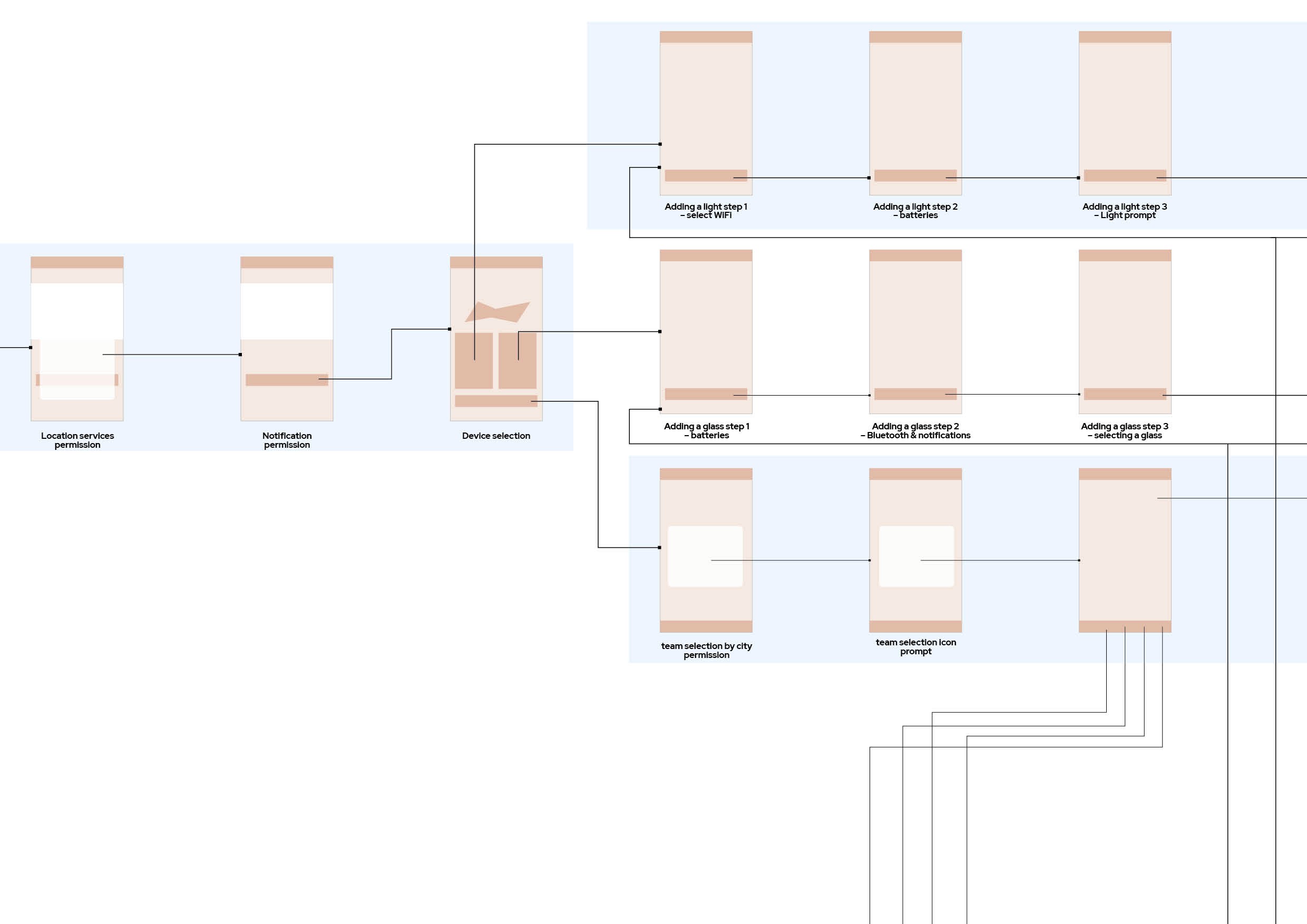
The first step was to map the sign-up process and add a glass or light process to inform the development team. This was done using initial prototypes and documenting the process, highlighting gaps and adding options that were required. Graphics for ice hockey lights, beer glasses and their packaging were also designed as an extension of the Budweiser brand.
The first step was to map the sign-up process and add a glass or light process to inform the development team. This was done using initial prototypes and documenting the process, highlighting gaps and adding options that were required. Graphics for ice hockey lights, beer glasses and their packaging were also designed as an extension of the Budweiser brand.
The first step was to map the sign-up process and add a glass or light process to inform the development team. This was done using initial prototypes and documenting the process, highlighting gaps and adding options that were required. Graphics for ice hockey lights, beer glasses and their packaging were also designed as an extension of the Budweiser brand.
The Known Knowns
Alongside my commercial work, myself and a small group of friends and I have created an initiative to help young designers. Known as The Known Knowns, we provide mentorships, design projects, folio reviews and social gatherings to build networks
The Known Knowns
Alongside my commercial work, myself and a small group of friends and I have created an initiative to help young designers. Known as The Known Knowns, we provide mentorships, design projects, folio reviews and social gatherings to build networks
The Known Knowns
Alongside my commercial work, myself and a small group of friends and I have created an initiative to help young designers. Known as The Known Knowns, we provide mentorships, design projects, folio reviews and social gatherings to build networks
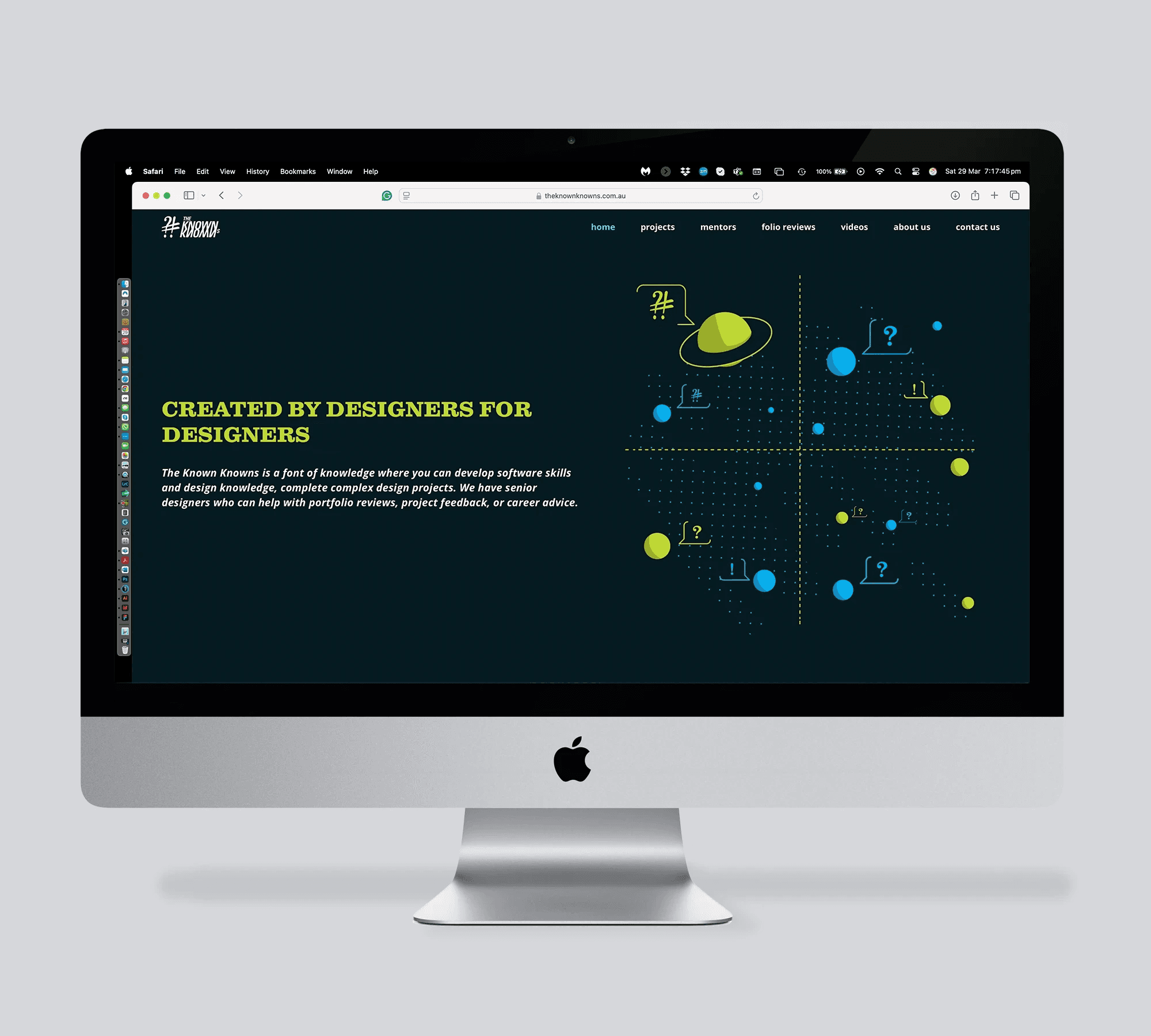
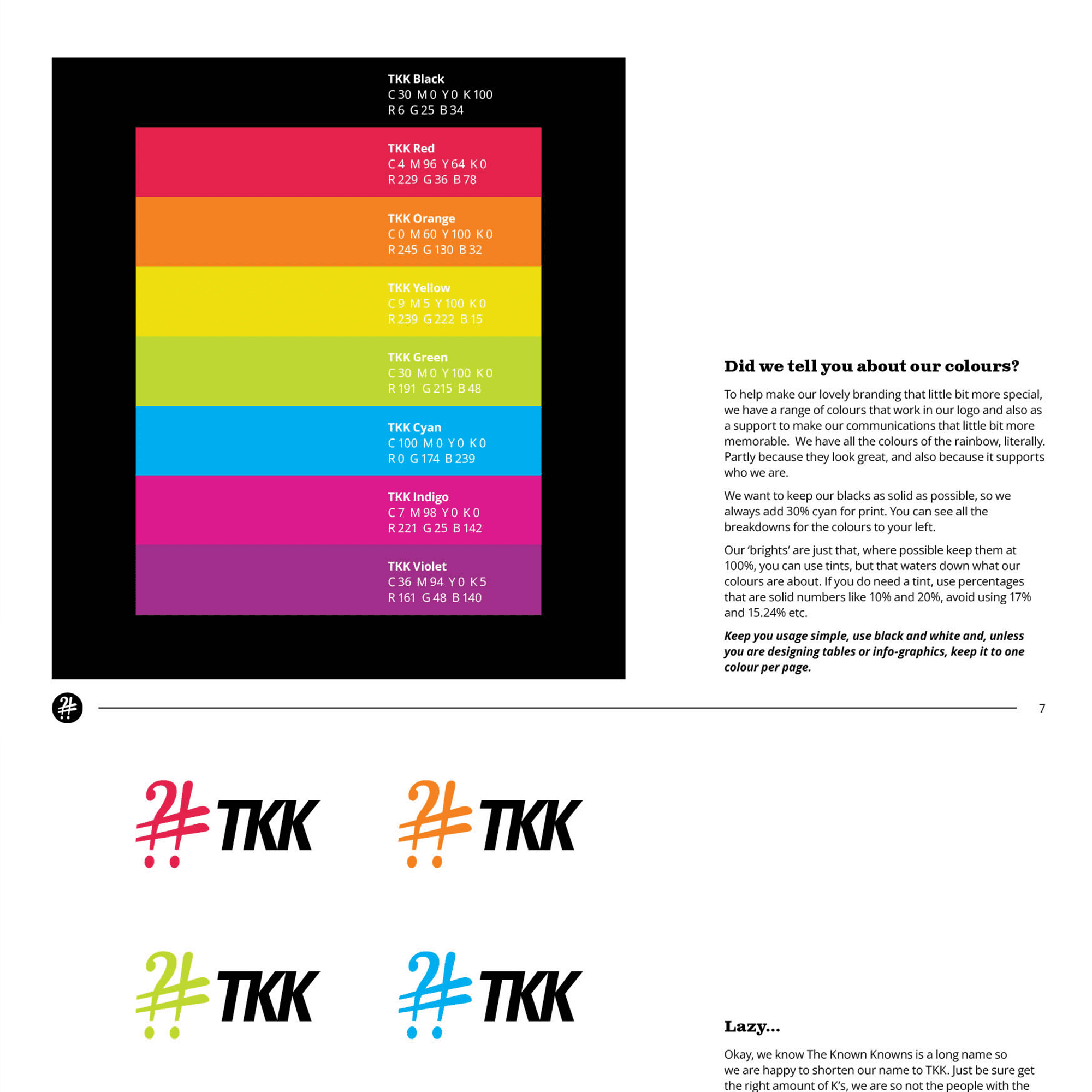
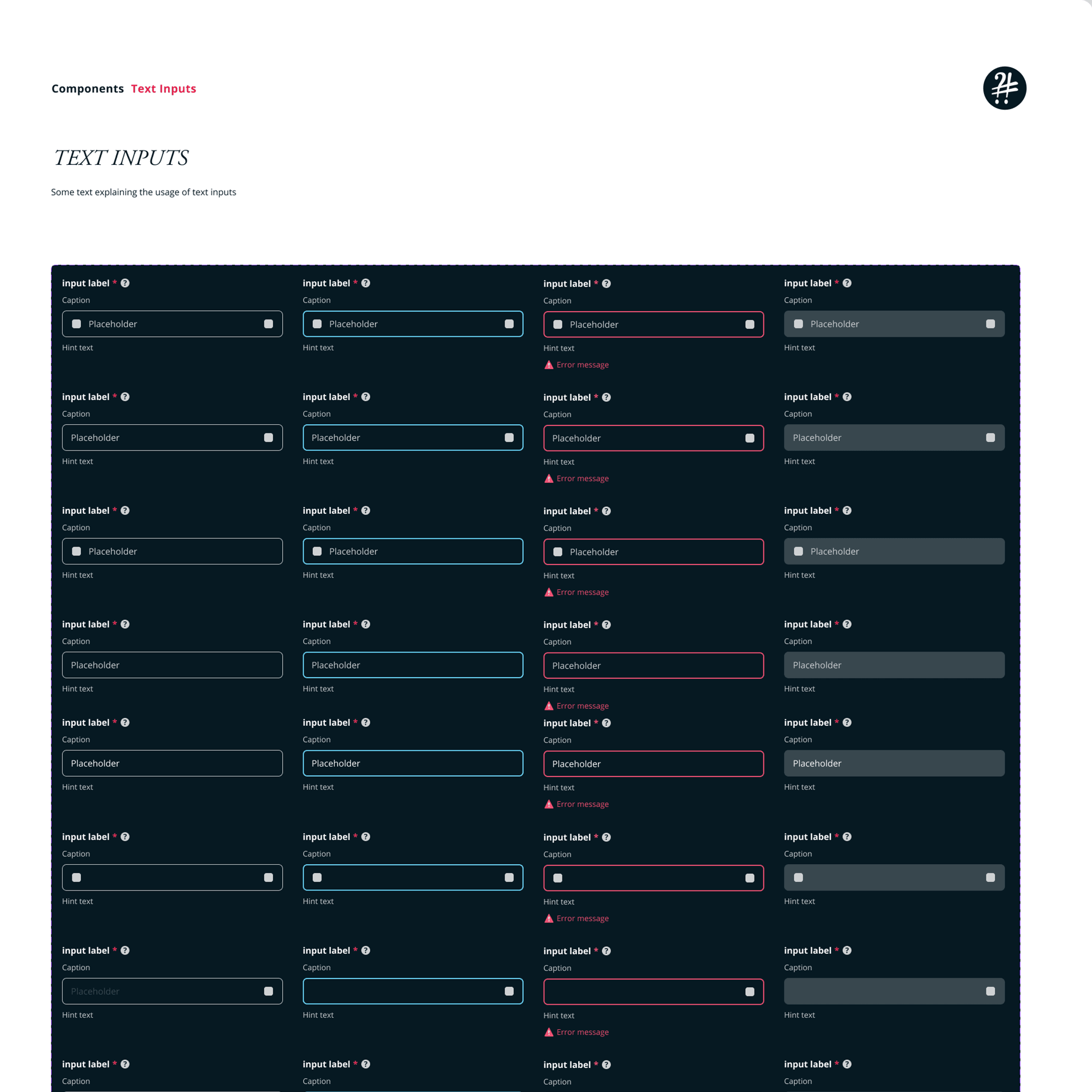
The name originated from Donald Rumsfeld’s quote about known knowns and known unknowns. Based on the Johari Window we know what we know, and we know what young designers need to know. We developed a brand identity and extension into print and web. The Known Knowns is an open and inclusive initiative created to help educate. We are optimistic, open-minded, supportive and welcoming. Our brand identity reflects our philosophy. The guidelines are designed to give designers permissions, not restrictions. They are written positively and reflected in how we speak to our audience.
The name originated from Donald Rumsfeld’s quote about known knowns and known unknowns. Based on the Johari Window we know what we know, and we know what young designers need to know. We developed a brand identity and extension into print and web. The Known Knowns is an open and inclusive initiative created to help educate. We are optimistic, open-minded, supportive and welcoming. Our brand identity reflects our philosophy. The guidelines are designed to give designers permissions, not restrictions. They are written positively and reflected in how we speak to our audience.
The name originated from Donald Rumsfeld’s quote about known knowns and known unknowns. Based on the Johari Window we know what we know, and we know what young designers need to know. We developed a brand identity and extension into print and web. The Known Knowns is an open and inclusive initiative created to help educate. We are optimistic, open-minded, supportive and welcoming. Our brand identity reflects our philosophy. The guidelines are designed to give designers permissions, not restrictions. They are written positively and reflected in how we speak to our audience.
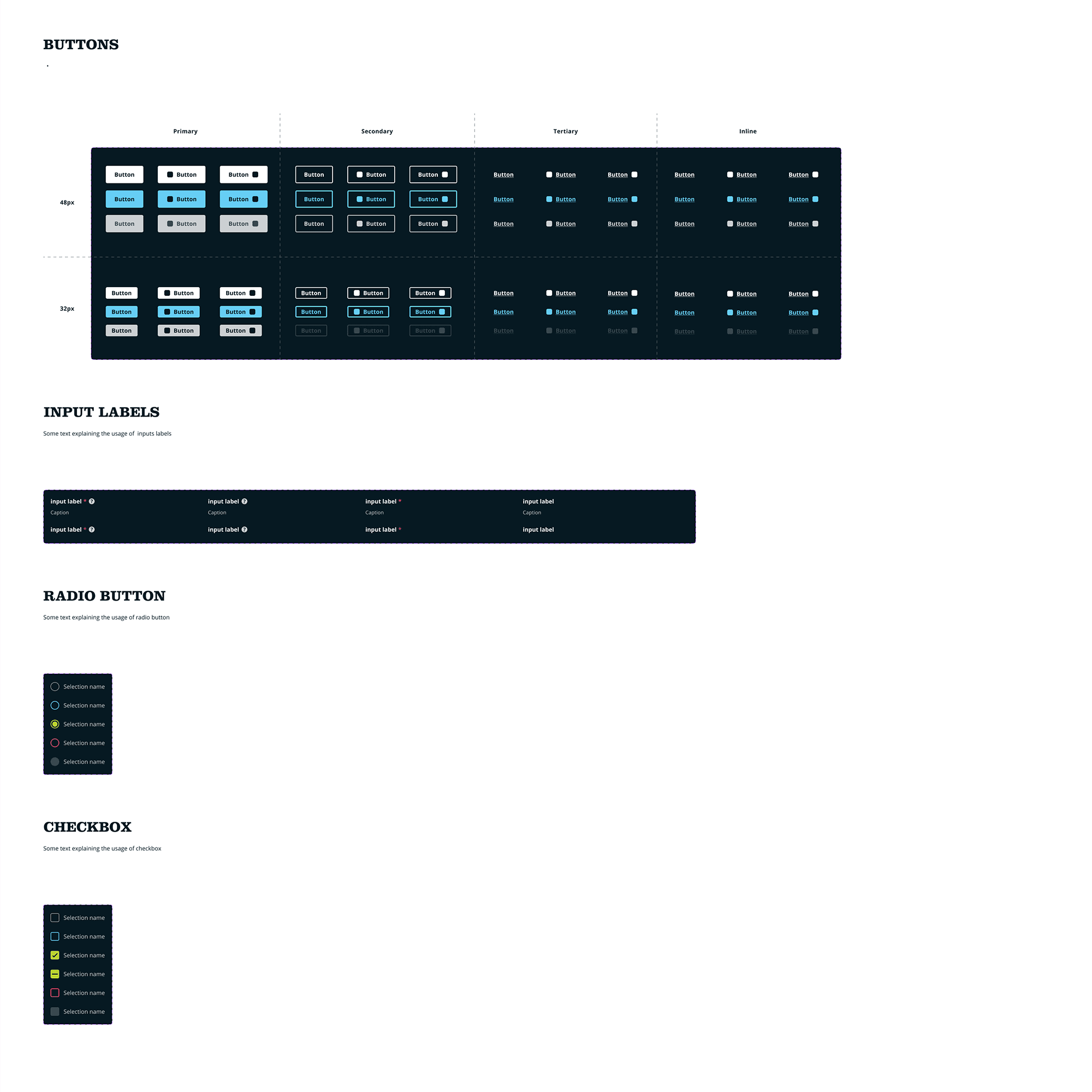
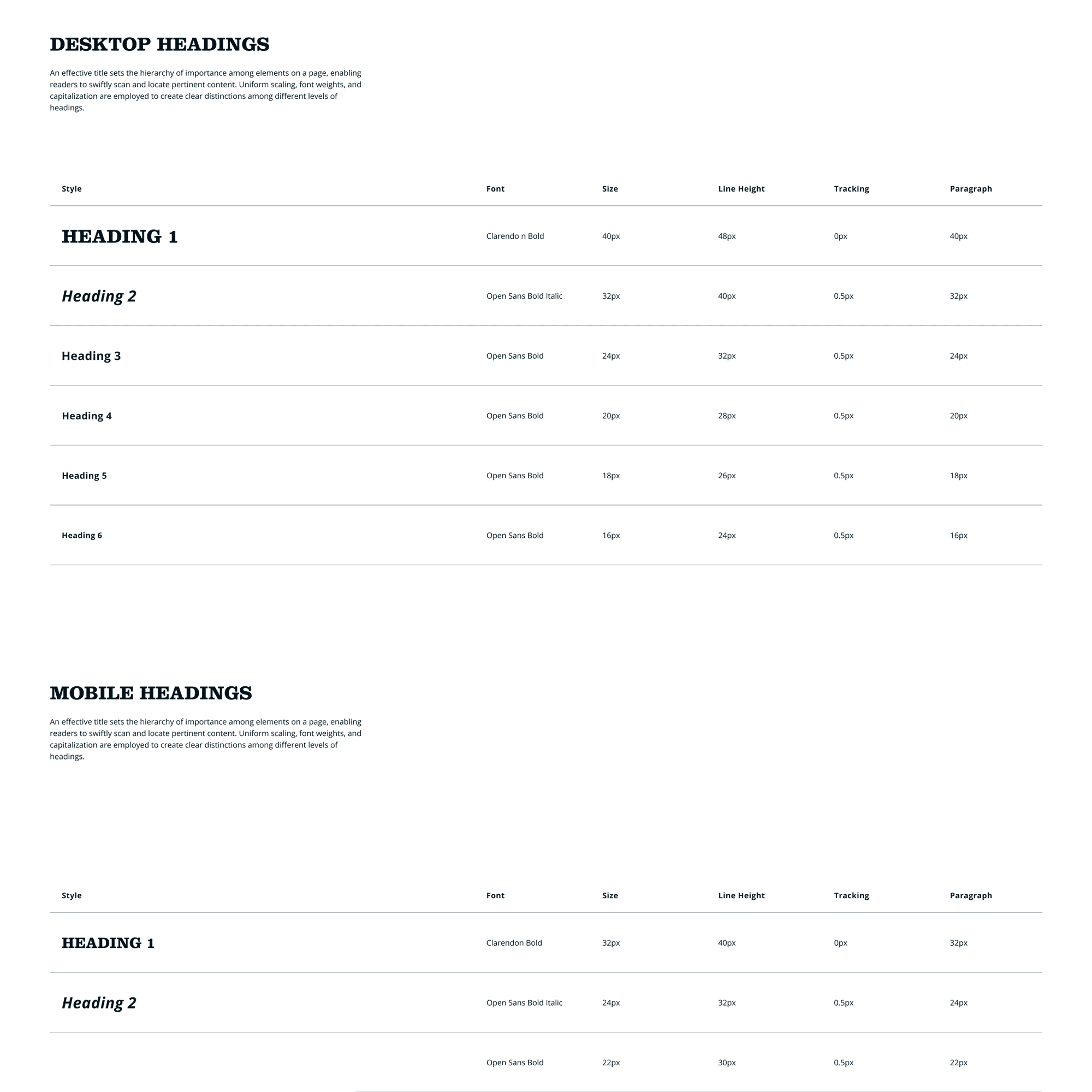
The main collaborators behind the initiative have contributed to the design of the brand identity and visual identity, including presentations, website, print guidelines, design system and illustrations.
The main collaborators behind the initiative have contributed to the design of the brand identity and visual identity, including presentations, website, print guidelines, design system and illustrations.
The main collaborators behind the initiative have contributed to the design of the brand identity and visual identity, including presentations, website, print guidelines, design system and illustrations.
Check out our website theknownknowns.com.au
Check out our website theknownknowns.com.au
Check out our website theknownknowns.com.au